In development 3D Cell Culture Vessel: MicoCell™
- Main Applications
Cell therapy, Regenerative medicine, Toxicity assay, Drug screening, Modeling of cancer and organs, etc.
- Applications
Features and Properties
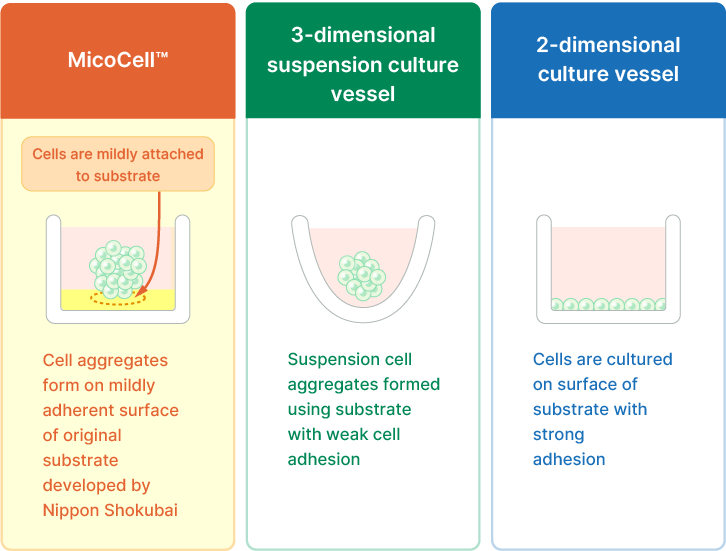
Advantages
Formation of cell aggregates attached to substrate
- (Cell aggregates) expected to be highly functional because they are in a similar state to that in the body
- Easy medium exchange
Non-biological material is used
Cell aggregates can be collected without enzymatic processing
- Cell aggregates can be collected together with cell products
Characteristics
Formation of suspension cell aggregates
- Easy to lose cells during medium exchange
Characteristics
Cultured cells are in a completely different state from that in the body.
- Difficult to express cells’ original function
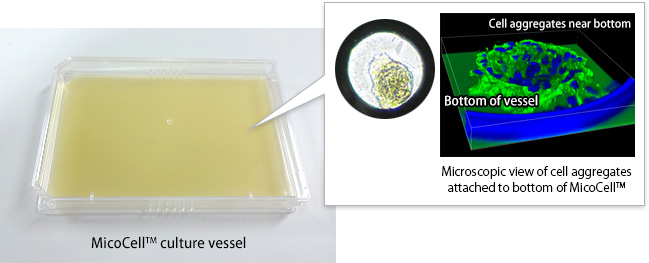
Examples of Use
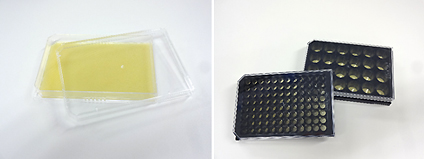
Vessels Examples
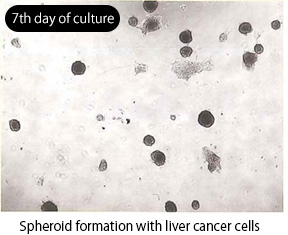
Culture Examples
Human adipose-derived stem cells
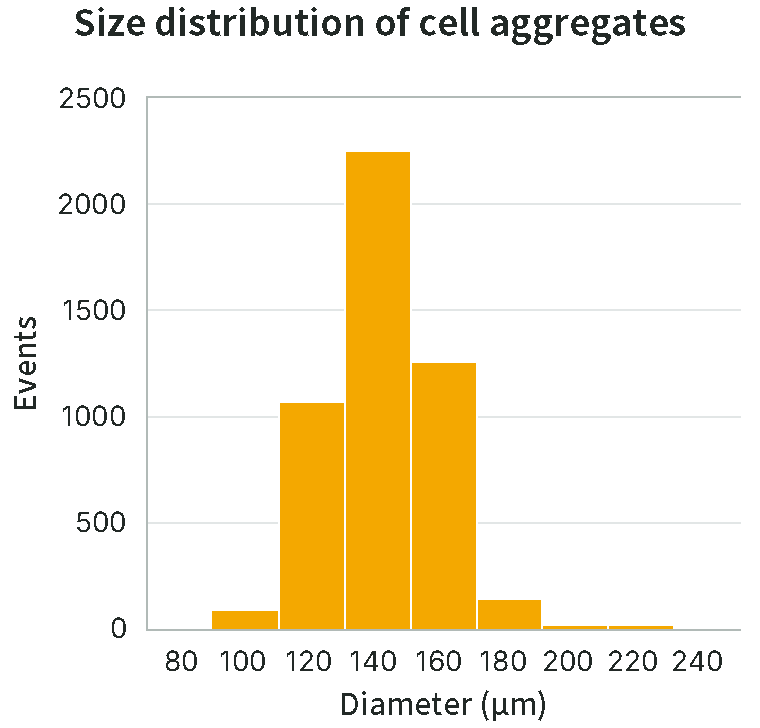
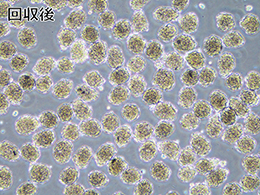
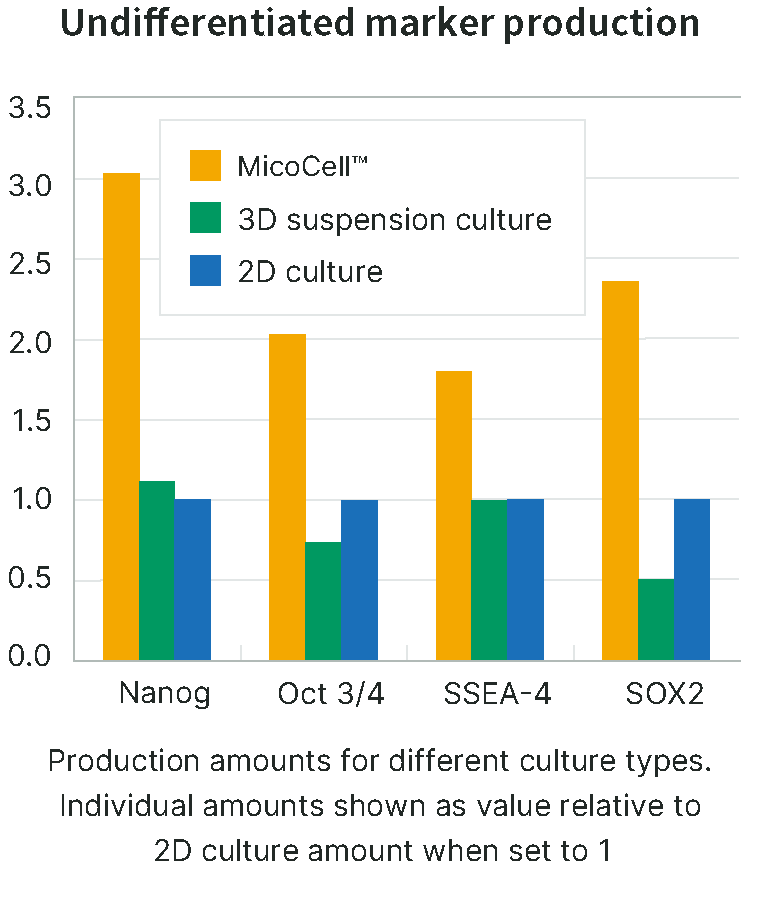
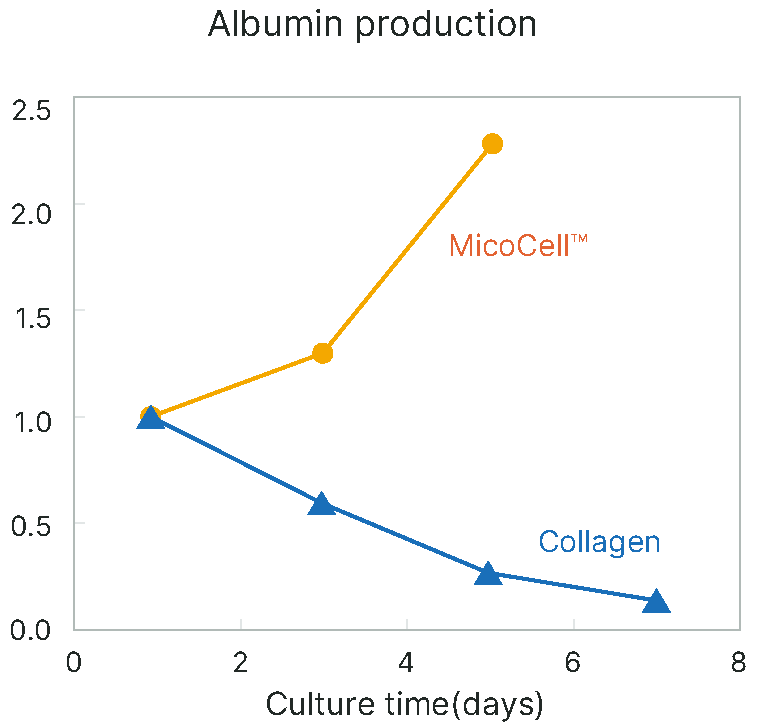
Rat Primary Hepatocytes
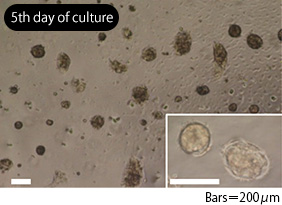
Liver Cancer Cells (HepG2)
Cell Aggregates Containing Vascular Structures
Co-culture of adipose-derived stem cells and vascular endothelial cells (HUVEC)
• Forming a dome-shaped blood vessel in the vertical direction from the adhesive substrate surface
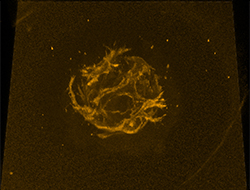
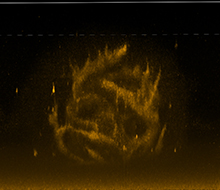
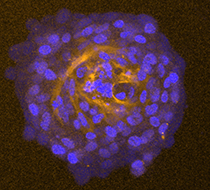
(Blue indicates cell nuclei)
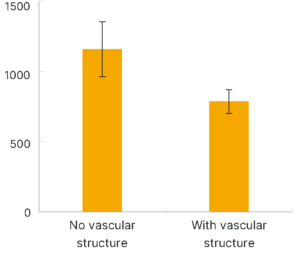
• Vascular structure improves hypoxia (state of low oxygen) in cell aggregates
| Item | Features | Advantages |
|---|---|---|
| Vessel Properties | No use of biologically-derived components and materials | Possible to create cultures that do not contain biologically-derived components and materials |
| Flat bottom, high transparency, no surface treatment | Clear observation with phase contrast and fluorescence microscopes | |
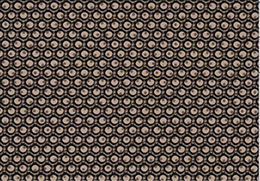
| High-density cavity structure | Possible to produce large quantities of cell aggregates with a uniform particle size (several hundred to 40,000 or more) | |
| Culture Properties | Formation of cell aggregates that are moderately attached to the bottom of the vessel | Reduces loss of cell aggregates during culture medium exchange, enables long-term culturing, and is easy to carry |
| Cell aggregates can be collected without the use of release agents (enzymatic processing) | Easy operation, low toxicity, cell products such as extracellular matrix | |
| Cells Functions | Maintains a good survival rate and protein production | Applications in drug screening, regenerative medicine, etc. |
Cautions
- This is a product we are currently developing.
It is not a medical device, but a physical and chemical device for laboratory research. - The data listed in this page are examples, and are not guarantees of the performance of this product.
- Please note that the contents and MicoCell™ specifications listed on this page may be changed without prior notice.
- Please be aware of the intellectual property rights related to third-party usage, usage methods, etc. when using the Nippon Shokubai product(s) listed in this website page. The Company does not take any responsibility whatsoever for any issues that may arise in relation to these intellectual property rights.
Related Papers
Fumiaki Shima, Tomomi Makino, Fabrication of Spheroids with Dome-Shaped Endothelial Tube Networks by an Adhesive Culture System, Adv. Biosyst. 2000120 (2020) https://doi.org/10.1002/adbi.202000120
Yutaro Yamada et al., 3D-cultured small size adipose-derived stem cell spheroids promote bone regeneration in the critical-sized bone defect rat model, Biochem. Biophys. Res. Commun. 603, 57-62 (2022) https://doi.org/10.1016/j.bbrc.2022.03.027
Fumiaki Shima, Tomomi Makino, Construction of brain-like spheroids containing endothelial tubular networks by an adhesive culture system, Biochem. Biophys. Res. Commun. 623, 176-180(2022) https://doi.org/10.1016/j.bbrc.2022.07.063
Minoru Kishikawa et al.,Bone regeneration using three-dimensional spheroids derived from dedifferentiated fat cells, Oral Sci Int. 2025;22(1):e128 https://doi.org/10.1002/osi2.1286
Sae Yokomine et al., Floating or adherent hepatocyte spheroid cultures using microwell chips with polyethylene glycol or polyimide surfaces, Biomed. Mater. 20 (2025) 035009 https://doi.org/10.1088/1748-605X/adc17d
Akihiko Yamaguchi et al., Coconut oil works as a gonadal feedback testosterone booster and increases pituitary aromatase (cyp19a1b) expression levels in fugu (Takifugu rubripes), Aquaculture 613(2026)743310 https://doi.org/10.1016/j.aquaculture.2025.743310
Satoshi Sobajima et al., Preclinical and early clinical safety of intra-articular spheroid adipose-derived stem cells for knee osteoarthritis: A translational study, Osteoarthritis and Cartilage Open 8 (2026) 100792 https://doi.org/10.1016/j.ocarto.2026.100792