High Viscoelastic Polymers, ACRYSET™ VA Series Acrylic polymer, dispersed in water
- Main Applications
Damping materials, soundproofing paints, shock absorbing materials, low temperature fixatives
- Applications
- Functions
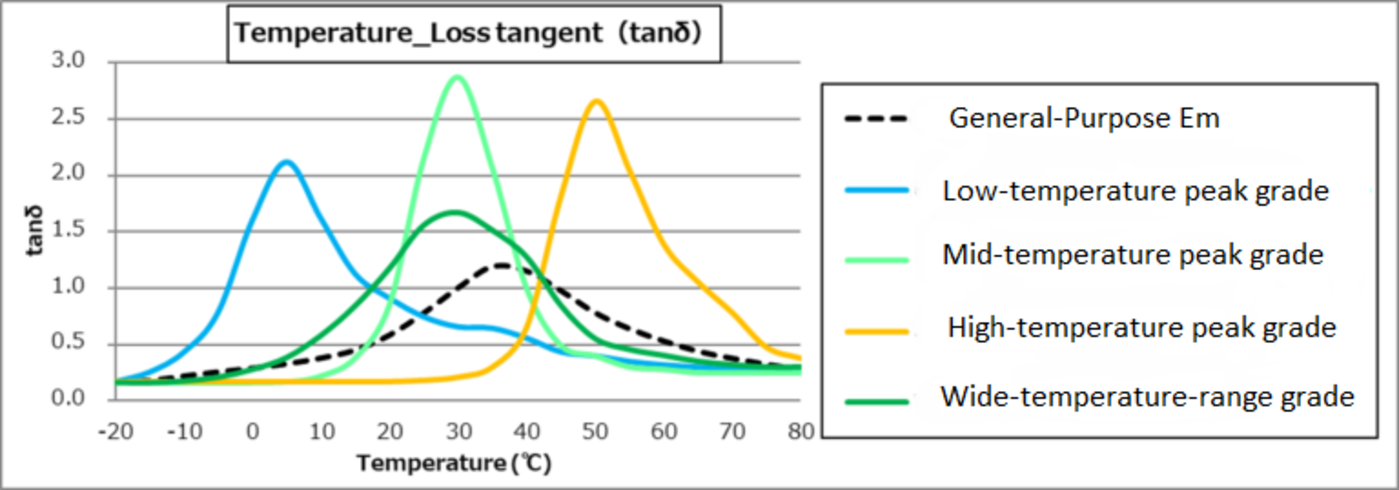
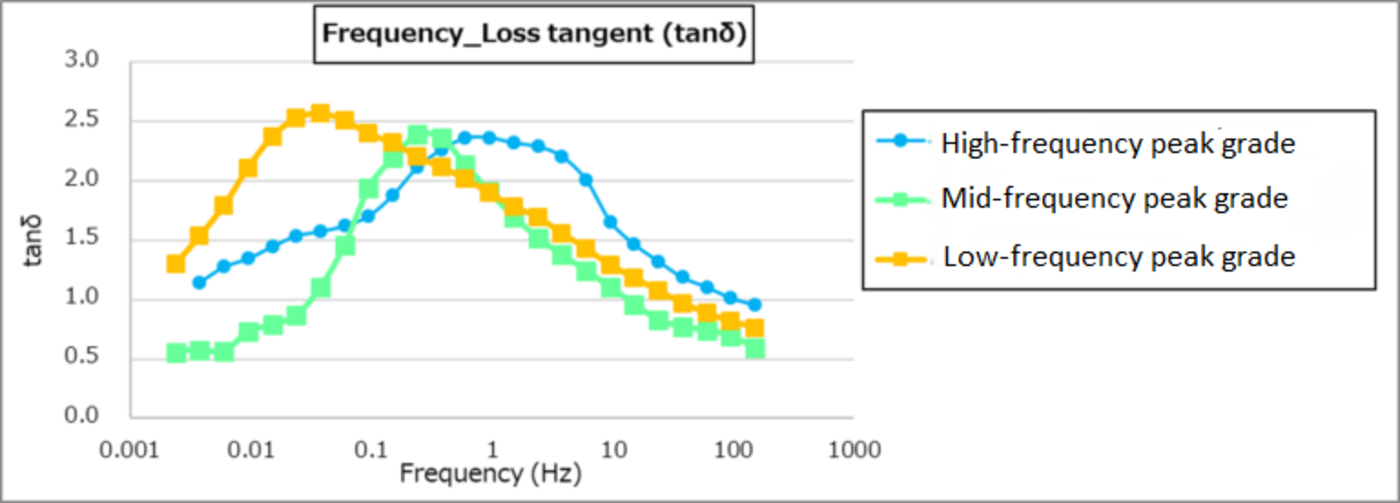
Tunable Damping Design for Target Temperature and Frequency Conditions
Through precise control of acrylic emulsion design, the ACRYSET™ VA Series offers a lineup for a wide range of conditions, delivering tunable stress relaxation while maintaining low viscosity.
Access detailed technical data for a representative grade (ACRYSET™ VA-075).
Lineup
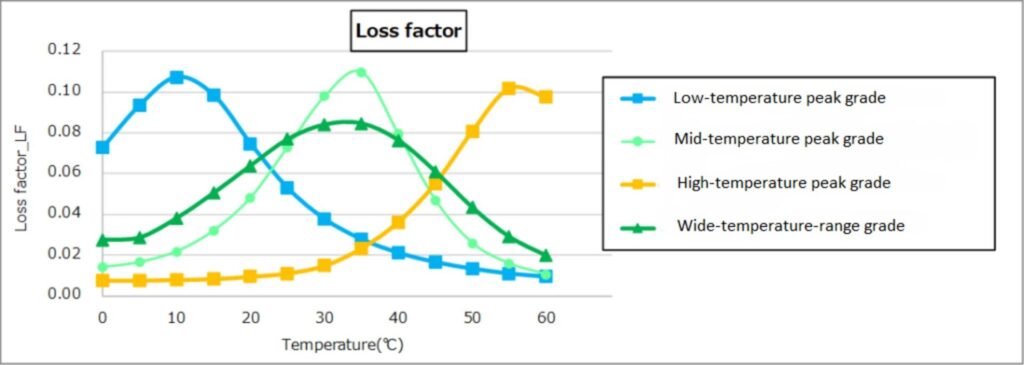
We offer a lineup of resins with various glass transition temperatures (Tg).
| Damping properties | General acrylic polymer | ACRYSETTM VA Series | ||
|---|---|---|---|---|
| For low temperature | For medium temperature | For high temperature | ||
| Tg [℃] | 37 | 6 | 30 | 49 |
| tanδ | 1.2 | 2.2 | 2.9 | 2.7 |
Key Features and Properties
- High vibration damping performance:
Efficient conversion of vibrational energy into thermal energy (tanδ ≥ 2). - Freedom of polymer design:
Enables polymer design tailored to specific temperature requirements. - High dispersibility:
Easy dispersion of additives (pigments, etc.).
Superior formulation flexibility, productivity, quality stability, and workability. - VOC-free:
Supplied as a water-based polymer.
Features of high tan δ products
ACRYSET™ VA series with a high tanδ value undergoes a rapid transition from glass to rubber state and is sensitive to heat.
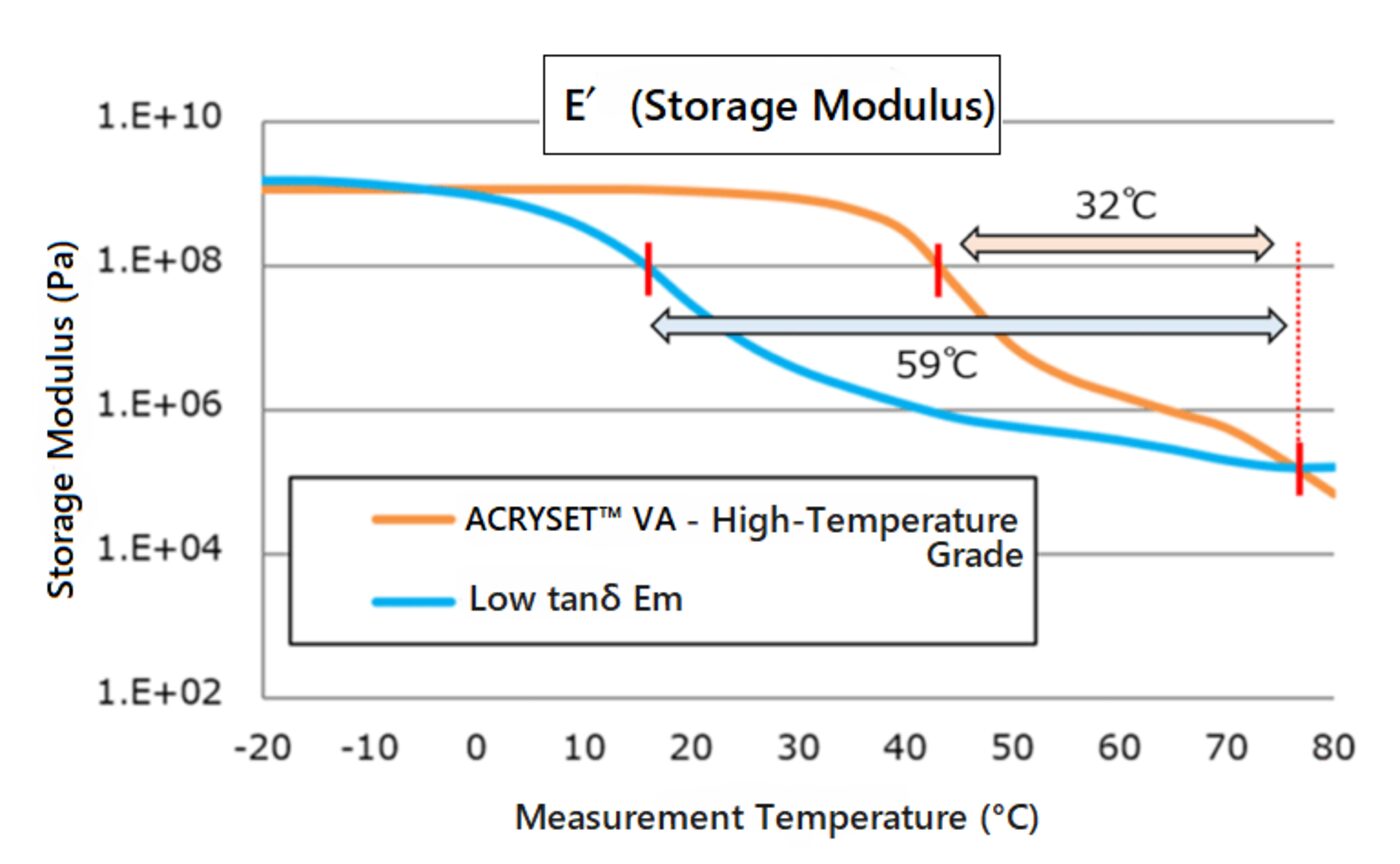
Compared to conventional acrylic emulsions (low-tanδ grades) in terms of thermal softening behavior, ACRYSET™ VA (high-tanδ grades) exhibits high stiffness around room temperature and rapidly softens upon heating. Due to its low tendency to soften at lower temperatures, blocking is less likely to occur. In addition, its narrow softening temperature range and sharp temperature response enable precise control of heat-sealing behavior.
Basic Information
The original design of polymers in the ACRYSETTM VA Series imparts superior vibration attenuation properties. The polymers possess stress relaxation properties due to control of the polymer’s dynamic viscoelasticity.
This characteristic is expected to impart superior properties for damping, soundproofing, shock absorbing, and thermal response, as well as binding capability and conformability.

Basic Physical Properties
| Item | ACRYSETTM VA Series |
|---|---|
| Appearance | Milky white liquid |
| Solid content | 50 ~ 60% |
| Solvent | Water only |
| pH | 7 ~ 9 |
| Minimum film-forming temperature(℃) | 0 ~ 40℃ |
| Viscosity (25℃) | <2000mPa・s |
| Particle size | 100 ~ 300nm |
| Polymer type | Acrylic polymer based |
Appearance
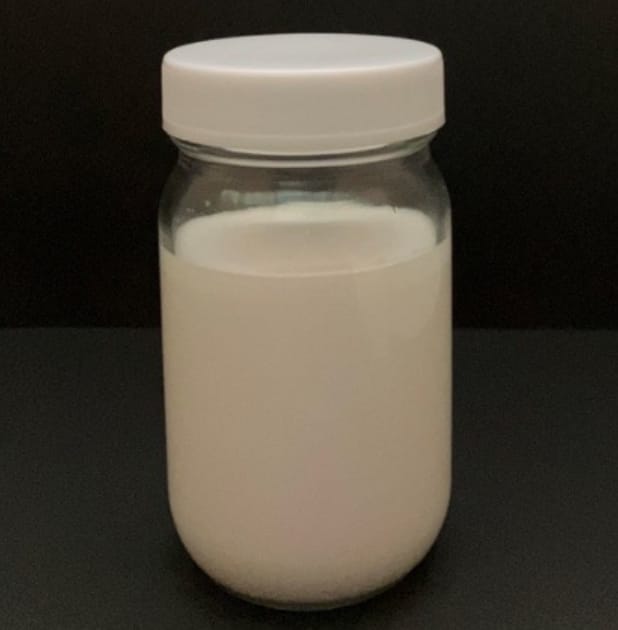
It is a milky white liquid with relatively low viscosity and high fluidity.
Function (Mechanism)
This product can convert vibrational energy into thermal energy by controlling thermal motion of polymer chains in the glass transition temperature range.

By utilizing our unique polymer design and synthesis technology, we can meet a variety of customer needs, including vibration damping, soundproofing, and shock absorption.
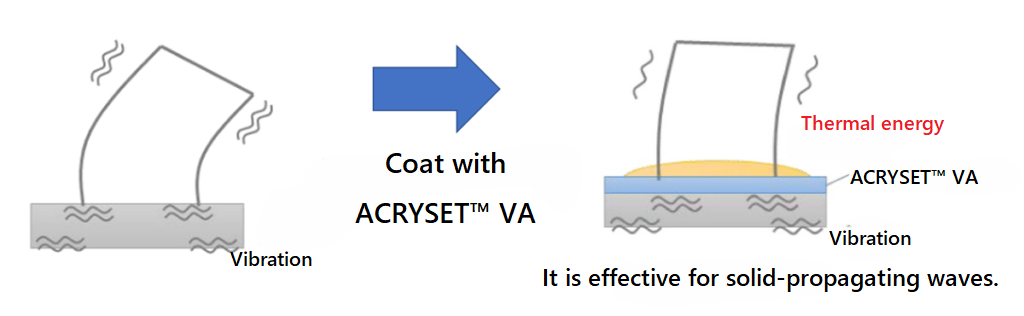
〇Examples of Functional Applications
- Vibration attenuation → damping properties, soundproofing properties, shock absorbing properties
- Flowability to deformation → binding capability and conformability
- Thermal motion control → adhesion through heat-induced permeation into the base material
Vibration Reduction with ACRYSET™ VA for Damping Paint
It can be used as damping paint by adding pigments and alkali soluble thickeners.
Thanks to the ease of adjusting the paint viscosity, it can be applied and dried on any desired area to achieve high-level damping properties derived from the polymer’s dynamic modulus.
Damping Characteristics of Vibration-control Coatings
Applications