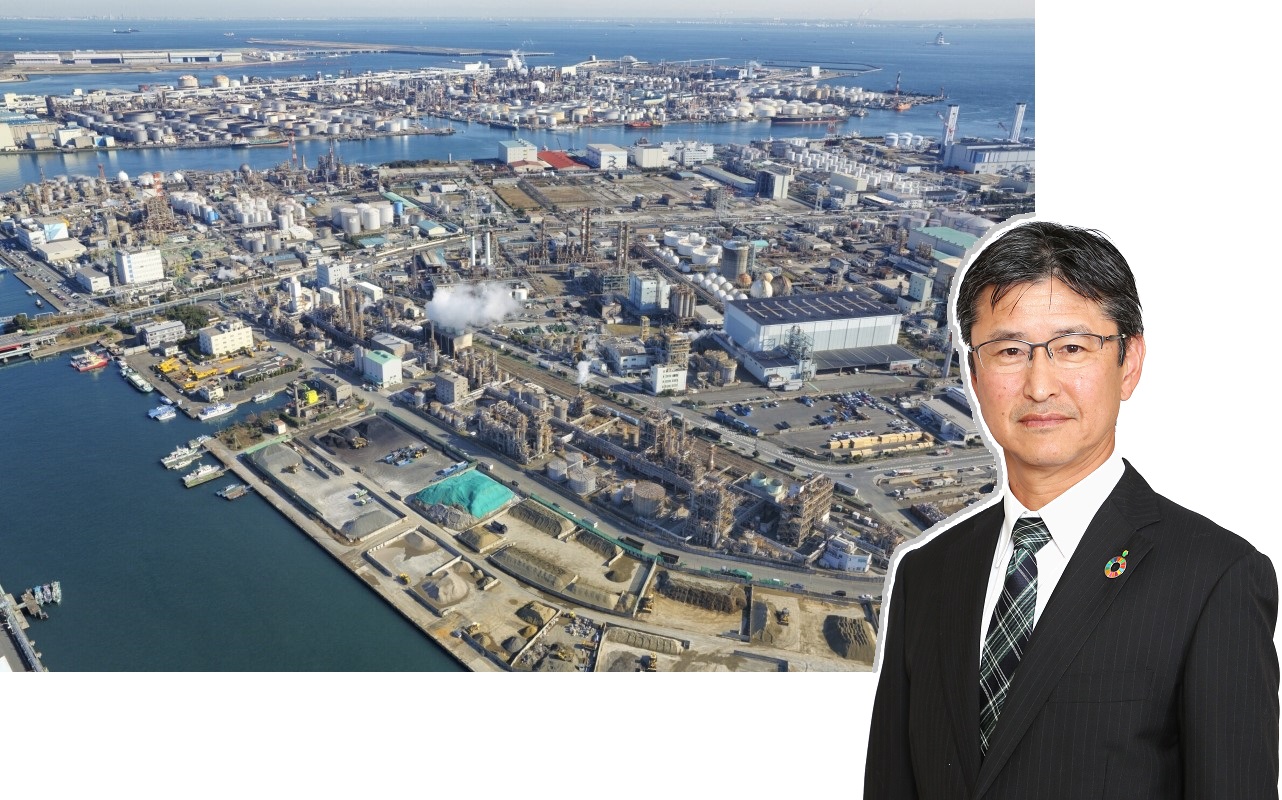
Kawasaki Plant
Plant Profile
| Plant manager | Koji Takeda, Executive Officer |
|---|---|
| Location | Chidori Plant 14-1 Chidori-cho, Kawasaki-ku, Kawasaki, Kanagawa Ukishima Plant 10-12 Ukishima-cho, Kawasaki-ku, Kawasaki, Kanagawa |
| Number of employees | 372 (As of March 31, 2026) |
| Products | Ethylene oxide, ethylene glycol, ethanolamine, polyethyleneimine, secondary alcohol ethoxylates, polymers for concrete admixture, acrylic acid special ester, and other products |
FY2025 Results of RC Initiatives
| Occupational safety and health | Serious injuries: 0 Injuries with lost workdays: 0 Injuries without lost workdays: 6 (including contractors) |
|---|---|
| Process safety and disaster prevention | Class 1 process safety accidents: 0 Class 2 process safety accidents: 1 |
| Environmental protection | Implemented measures for energy conservation amounting to about 800 kL/year (crude oil equivalent) |
In terms of occupational safety and health, although we achieved zero serious injuries and injuries with lost workdays, there were six injuries without lost workdays. As countermeasures, we reviewed work procedures and implemented safety reminders through on-site signage. In addition, by repeatedly conducting safety training using the occupational injury cases described above as teaching materials, we are working to prevent the recurrence of similar issues.
In process safety and disaster prevention, there was one Class 2 process safety accident, and the target was not achieved. As a countermeasure, we carried out equipment modifications to prevent recurrence. Furthermore, we have completed the establishment of internal rules for the HAZOP–LOPA method as a new method for quantitatively assessing process risks, and we will implement this method in a planned manner starting next fiscal year.
In environmental protection, there was one environmental issue (on-site leakage). As a countermeasure, we reviewed work procedures and took additional measures to prevent recurrence. In response to the PRTR Law, we continued efforts to reduce emissions of substances such as boron and ethylene oxide.
We will continue to promote RC initiatives and aim to build a safer and more reliable manufacturing plant by incorporating advanced technologies.
Implementation of Fit Testing
Following revisions of regulations related to Japan’s Industrial Safety and Health Act, workers who use respiratory protective equipment (such as masks) in tasks handling certain chemical substances are, for the prevention of health hazards, in principle required to undergo a fit test once every year to confirm that the mask fits properly on the face.
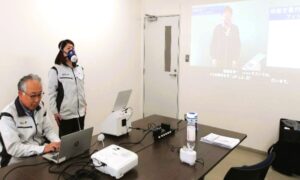
In response to this revision, the Kawasaki Plant introduced fit-testing equipment and conducted fit tests not only for workers for whom implementation is required by regulations, but also for all employees, expanding the scope for preventive and educational purposes.
As a result of the fit tests, it was confirmed that the usual mask-wearing methods of many employees were appropriate. However, as improper fit was identified for some employees, guidance was provided on adjusting mask straps and changing mask sizes. In FY2026, we plan to expand the scope as necessary to employees of contractors and will continue efforts to reduce health risks.
Technical Skill Transfer and Human Resource Development through DX
At the Kawasaki Plant, we are promoting initiatives that actively utilize Digital Transformation (DX) in the development of human resources within the manufacturing division. As part of these efforts, we are advancing education and training for operators using an Operator Training Simulator (OTS).
With the aim of enhancing the quality of education and fostering more practical skills development by digitally reproducing and sharing the knowledge and operational know-how cultivated at production operations, we introduced a new OTS in collaboration with the manufacturing divisions of the Chidori and Ukishima sites of the Kawasaki Plant, with the support of a system development company.
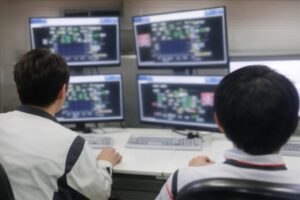
This system features a virtual environment that replicates the operation screens used in actual plants, enabling trainees to experience operations with a sense close to that of the real workplace. In addition to normal operations (the operation and control of equipment during plant operation), trainees can repeatedly practice equipment start-up, changes in operating conditions, and responses to troubles and emergency situations in a safe environment.
By utilizing digital technologies, we have visualized and systematized decision-making and responses that previously tended to rely on the experience and intuition of skilled operators, thereby realizing reliable transfer of technical skills. Going forward, we will continue to work through DX to enhance on-site response capabilities and to develop human resources who support safe and reliable plant operations.
Plant Data
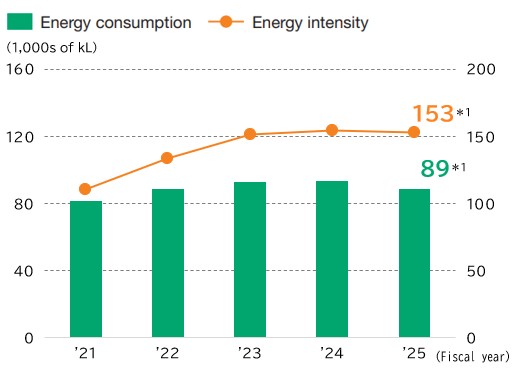
Trends in Energy Consumption and Intensity
Trends in CO₂ Emissions and Intensity
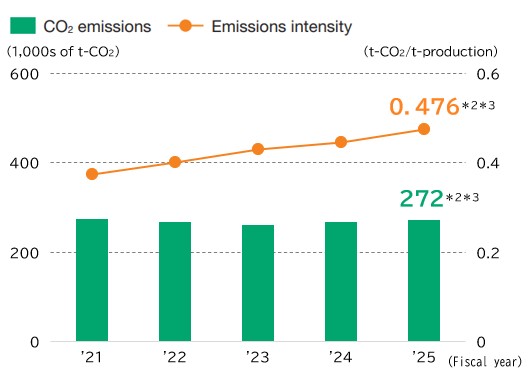
*3 Due to the revision of the Act on Promotion of Global Warming Countermeasures (Global Warming Countermeasures Act), the calculation method has been revised from the FY2023 results.
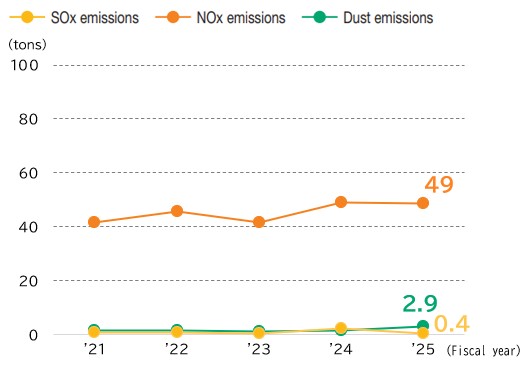
Trends in Emissions of SOx, NOx, and Dust
Trend in COD of Wastewater
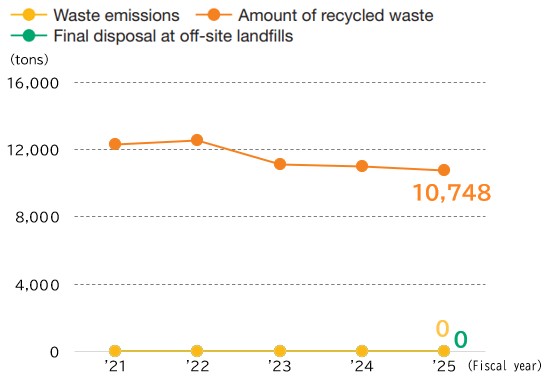
Trends in Amount of Waste, Recycled Waste, and Waste for Final Off-site Landfill Disposal
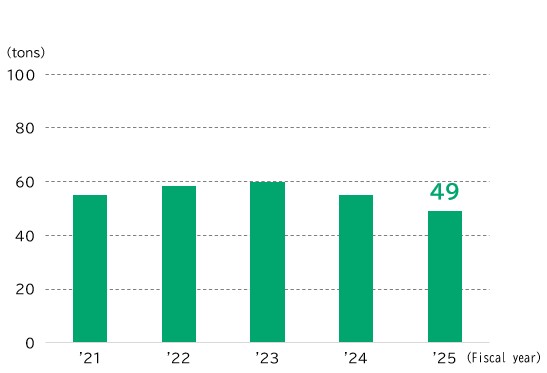
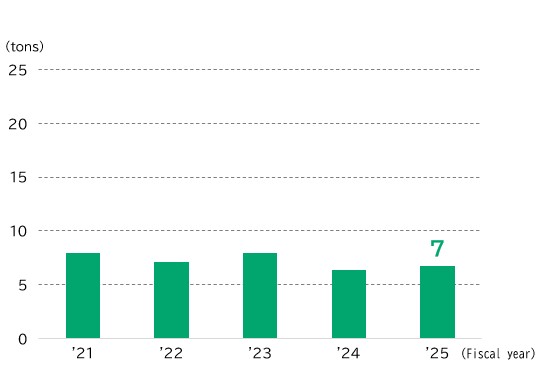
Trend in Emissions of Substances Subject to the PRTR Law