Occupational Safety and Health
Aiming for zero occupational injuries, Nippon Shokubai implements occupational safety and health activities to improve working environments, reduce risk factors, and promote the creation of comfortable workplaces.
Occupational Safety and Health Policy
This Policy has been approved by the Sustainability Promotion Committee (which is chaired by the President and composed of Inside Directors of the Board, Executive Officers and others appointed by the President).
The Nippon Shokubai Group continues to create comfortable working environments and promote occupational safety and health activities together to prevent occupational injuries and health problems and to ensure safety and health for our employees based on the RC Policy.
Promotion System
Targets and Results
| FY2025 targets | FY2025 results | FY2026 targets |
|---|---|---|
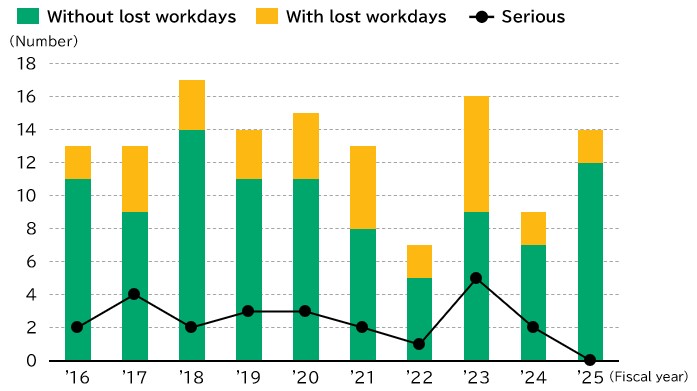
| Serious injuries*1: 0 Injuries with lost workdays: 0 Total occupational injury frequency rate*2 ≤ 1.5 (including contractors) | Serious injuries: 0 Injuries with lost workdays: 2 Total occupational injury frequency rate: 2.2 (including contractors) | Serious injuries: 0 Injuries with lost workdays: 0 Total occupational injury frequency rate ≤ 1.5 (including contractors) |
- Serious injuries: Resulting in injuries with 4 or more lost workdays, or those classified under the disability grades specified in Appended Table 1 of the Ordinance for Enforcement of the Industrial Accident Compensation Insurance Act.
- Total occupational injury frequency rate: Number of casualties in occupational injuries (injuries with lost workdays (1 day or more) + injuries without lost workdays) per 1 million actual working hours.
In the past several years, occupational injuries at the Company have often involved younger employees. Similarly, our contractor report many injuries among relatively inexperienced workers. We intend to enhance safety training to improve risk awareness among younger and less-experienced employees.
Trends in Total Number of Occupational Injuries (including contractors)
Initiatives
Continuously improving Occupational Safety and Health
We work to continuously improve occupational safety and health, mainly through our Occupational Safety and Health Management System (OSHMS). We also engage in hazard prediction (KY activity*1), near miss analysis*2 5S activities*3, and other basic safety activities on a daily basis, and systematically conduct training and drills in an effort to prevent occupational injuries. When occupational injuries occur in the workplace, we explore the causes at the scene, draft countermeasures, and have the Safety and Health Committee evaluate the countermeasures from the perspectives of labor and management to prevent the same or similar injuries from occurring again.
- KY activity: An activity involving holding meetings before starting tasks to identify potential hazards (unsafe behaviors and conditions) and undertake countermeasures in an effort to prevent injuries.
- Near miss analysis: Reflecting on near misses in everyday operations to identify why they occurred and how they could have been avoided, and undertaking safety measures in terms of both facilities and behavior.
- 5S activities: Promoting and practicing the 5S: sort, set in order, shine, standardize, and sustain.
Prevention of occupational injuries
We work to reduce and eliminate the risks of tasks and substances we work with, not only for routine work but also for new and non-routine work, by assessing them based on our occupational safety and health management system.
Basic safety initiatives
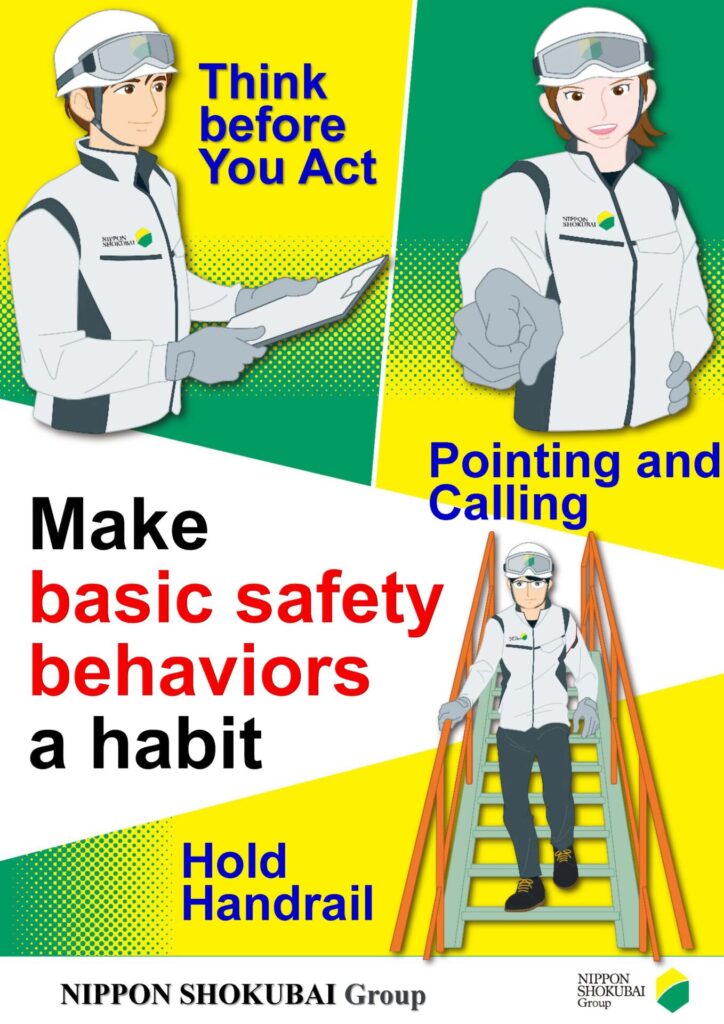
We recognize the importance of daily safety activities in preventing occupational injuries. Accordingly, we devote energy to KY activities preceding tasks, documenting near misses, and implementing 5S activities in the workplace. We aim to improve daily safety activities by regularly conducting KY training and seminars to maintain and improve risk awareness. Another effort aiming to prevent occupational injuries is posting posters and conducting training to thoroughly inform employees and ensure the rigorous implementation of the three basic safety behaviors: (1) Think before you act; (2) Pointing and calling; and (3) Hold the handrail when stepping on stairs.
Hands-on training sessions
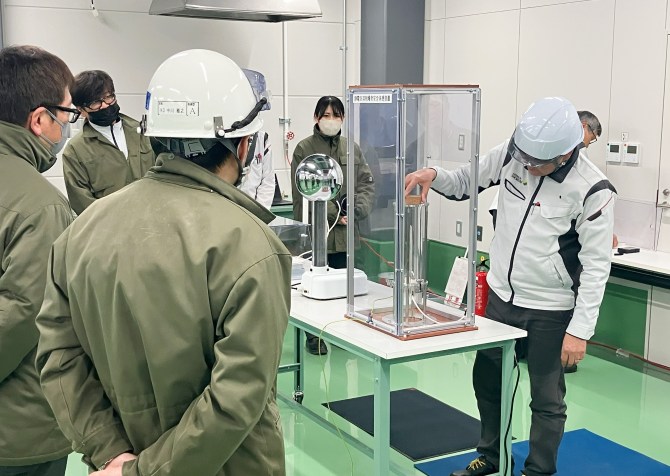
Aiming to improve employees’ sensitivity and ability to predict potential risks in the workplace, we provide various hands-on training programs, including training on ignition and explosion caused by static electricity, pinch injuries and caught-in or entanglement incidents involving machinery, and liquid splash exposure.
Health-related accommodations for retirees from the Company
Although we have never manufactured asbestos products in our history, some of the insulation materials and sealants we used contained asbestos. Therefore, we respond to health-related consultations from retirees from the Company and set up medical examinations for all who desire them. For more information, please visit our website.